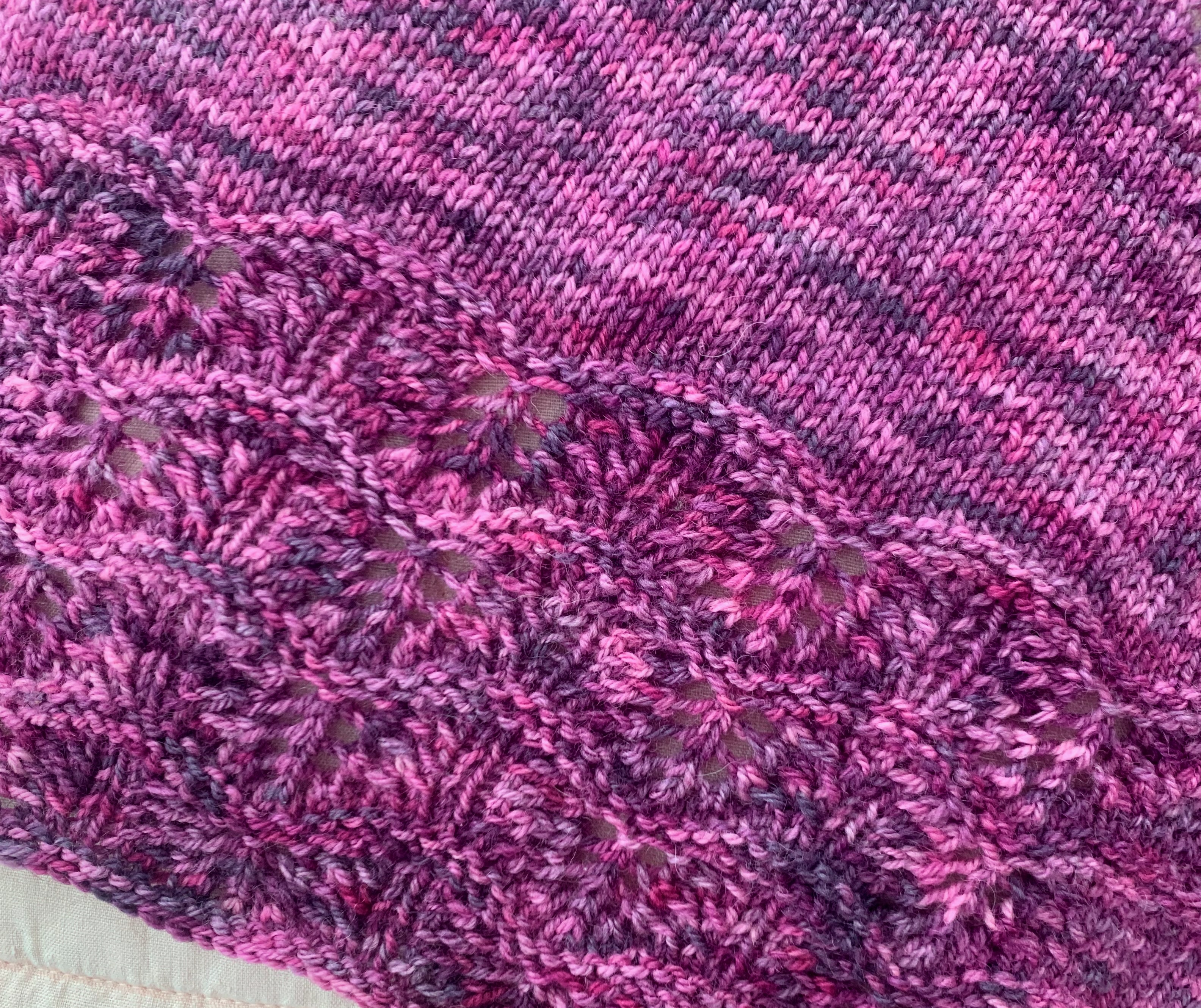
I taught myself to knit last year.
Every year, it gets harder to buy knits made of natural fibers at moderate prices. Today, most mass-market knits are either made of pure synthetics (such as acrylic), or natural fibers blended with synthetics. This shift to synthetics was driven by a simple motive—to drive down costs and drive up profits. I used to work in the garment and footwear manufacturing industry, and I’ve seen the differential in cost. Natural fibers cost a lot more than synthetic ones, and not by degrees, but by magnitudes.
I came to the realization last winter that if I wanted to control what I put on my body, I needed to stop buying my knitwear ready-made, and start making it myself.
*
When you knit, you spend a lot of time in intimate proximity with yarn. Your mind drifts from observations regarding the yarn’s tactile properties (What does it feel like? Is it heavy? Is it warm? How does it drape?) to questions about the yarn’s origins—how it was grown, where was it manufactured, whose hands touched it before mine?
*
The last time I wandered down rabbit holes like these, I was still working in the apparel industry. A work assignment led me to research textile supply chains. What I learned made me almost completely stop buying clothing. Our shoes and clothes lead long and complex lives before they end up on our bodies, or in our closets. These are, for the most part, ugly lives. The garment industry generates a lot of pollution, and a lot of misery.
The end consumer cannot fully escape this cycle. Garment and fabrics are dyed with heavy metals, finished with toxic chemicals. For years, I created marketing materials to drive sales for PFAS-coated garments (e.g., rain shells with waterproof laminates).
I went to work in the garment industry out of a love for design and fashion. Working in the industry almost killed that love. For a long time, shopping stopped being fun. I knew too much.
*
When I left that life and moved to New York, I learned to loosen those strictures a bit and fell back in love with fashion and design. But that is a story for another time.
*
Yarn production can be just as toxic and just as problematic (in terms of human rights and labor conditions) as any other sector of the textile industry. But there are also more alternatives. Hobbyists like myself do not require industrial quantities of materials. This paves the way for small-scale production, for producers to choose pathways unavailable for manufacturers who chase industrial scale. Unlike consumers of mass-produced ready-made garments, knitters can wield a lot more control over the kind of yarn they purchase for their projects. In New York, where I live, one can literally knit oneself into a local ecosystem, buying materials grown, milled, and finished entirely, if not in New York state, then in the greater northeast.
*
There is another reason to make my own knitwear. It allows me to reclaim the pleasures of design, of working with color and texture, getting to know my materials and suppliers, of drawing and imagining and researching and dreaming. There is such joy in creating and making — why would I cede that joy to someone else?

