This winter, I joined the #100dayproject for the first time. I went into it thinking that I would approach the challenge a certain way, and wound up abandoning those expectations about 30 days in. The #100dayproject is quite difficult if you you faithfully follow the rules of the challenge, as set out by Michael Beirut:
The specific dates always change, but the basic assignment goes something like this:
Beginning Thursday, October 21, 2010, do a design operation that you are capable of repeating every day. Do it every day between today and up to and including Friday, January 28, 2011, the last day of the project, by which time you will have done the operation one hundred times. That afternoon, each student will have up to 15 minutes to present his or her one-hundred part project to the class.
The only restrictions on the operation you choose is that it must be repeated in some form every day, and that every iteration must be documented for eventual presentation. The medium is open, as is the final form of the presentation on the 100th day.
As I wrote in an earlier post about participating in the #100dayproject, my plan was to use the time to work on my watercolor skills. At first, I planned to paint one watercolor a day. I quickly abandoned this plan. It was neither practical, nor suitable for my medium–at least, not if I wanted to do more than a quick watercolor sketch. So then it became “I’ll do watercolors in bursts, mostly on weekends.” This strategy ended up working better, and I’ve kept up that practice even though the #100dayproject ended months ago.
In the second half of the 100 days, I ended up veering away from the original parameters. I worked on new work every few days, spending anything from 10 minutes to a few hours, depending on my schedule. Even though I didn’t end up completing the actual #100dayproject assignment, the structure of the #100dayproject helped me establish a regular watercolor (and drawing) practice. 100 days was enough time for new habits to take root.
Next year, I would modify the project parameters somewhat to make the exercise more sustainable, in terms of the energy and attentiveness necessary to keep up an intense creative project over such a long duration. Perhaps I’ll try to divide the challenge into discrete weeks, setting myself one finished work per week. Or perhaps I’ll experiment with different media, or different representational approaches, to find something that I can complete in 15-30 minutes per day.
Now that I’ve established a regular painting practice, I can use the #100dayproject to help deepen my engagement with an aspect of that practice. But what do I want to focus on? I have until next March to figure that out.
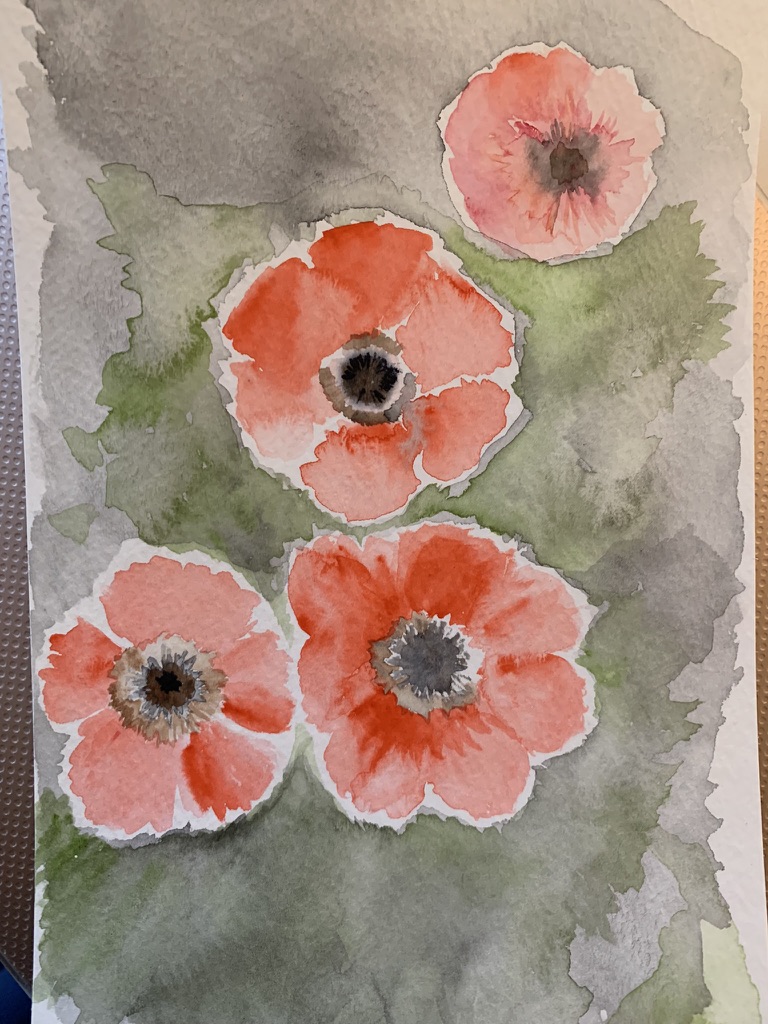
My first watercolors were simple. I’d taken a long hiatus from painting, and the first images were all about scraping the rust off. To keep things simple (or so I thought), I painted from reference photos that I found on the internet.


As you can see, I struggled with all sorts of things– details, layering washes, when to work wet-on-wet vs. waiting for the bottom layers to dry before adding more layers of color.
I decided to switch to drawing and painting from life. This made a huge difference. I bought better tools–good brushes and paper make a world of difference. I also started following tutorials — some of my favorites came from a book published by the American Society of Botanical Artists, Botanical Art Techniques. I learned that I liked to block out forms loosely, with a larger brush and washy color, and then layer in details using drybrush.


Each sketch takes hours.
Perhaps I will get faster as I improve, but many of the projects in the ASBA book include a rough estimate of the number of hours required–and even simple paintings take a long time. I suspect I’ll get better, but not faster. The paintings will just turn out nicer.
Here’s a post about what got me back into watercolor painting.
 it might be art
Leave a comment